ESPD Response cardinalities
As you can see the UBL-2.3 Schema is quite flexible as, except for a few cases practically all the elements are optional.
The ESPD-EDM model, however, adds a few more restrictions regarding the cardinalities. These can be seen in the diagram below, which presents the ESPD-EDM structure for the ESPD Response with its own cardinality restrictions. Notice that ESPD-EDM does not change anything else from the UBL-2.3 Schema.
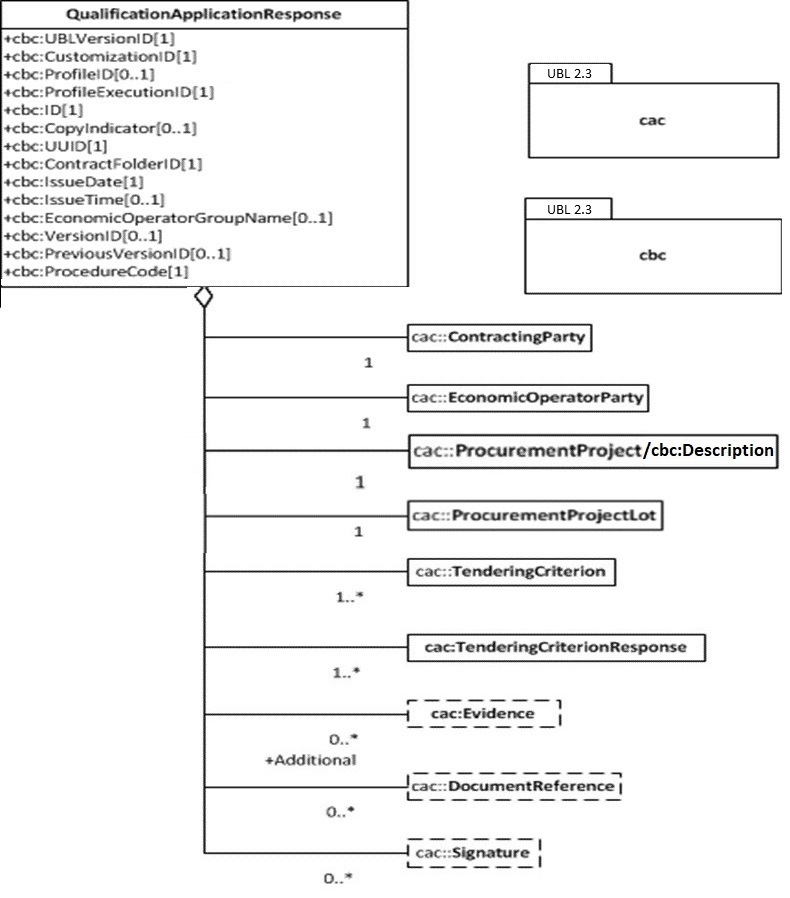
Figure 193. ESPD-EDM 'QualificationApplicationResponse', UML diagram
If you compare both figures you will observe that:
-
The cardinalities of the root common basic components, such as
cbc:ID,cbc:UUID,cbc:TendererRole, and other are different for the ESPD than for UBL-2.3; -
Similarly, the cardinalities of aggregate components like
cac:ContractingParty,cac:ProcurementProjectLotandcac:TenderingCriterionare different to the UBL-2.3 ones.
The cardinality constraints added by the ESPD are not defined in the XSD Schema. In order to control these constraints the ESPD-EDM uses ISO Schematron assertions. The ESPD-EDM distribution package provides Schematron schemata and CVA files for the validation of the XML instances (folder /validation).
The European Commission (EC) ISA2 Programme provides an Interoperability Testbed where Stakeholders can freely test these validation artefacts.